


What Temperature to Bake Macarons for Perfect Texture and Feet
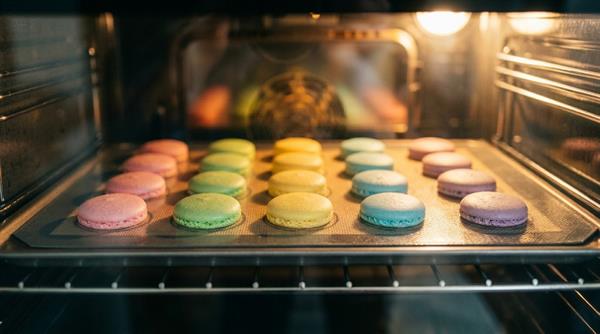
What Temperature to Bake Macarons for Perfect Texture and Feet
Baking macarons is often considered a high-stakes kitchen challenge. You mix the batter perfectly, pipe the circles with care, and wait for them to rest. Yet, the moment they enter the oven, things can easily go wrong. Shells crack, tops brown too quickly, or the signature "feet" fail to rise. The secret to avoiding these disasters lies in one crucial factor: temperature control.
Understanding exactly what temperature to bake macarons will transform your baking experience from a guessing game into a reliable process. When you control the heat, you control the outcome.
In this complete guide, you will learn the ideal temperatures for different oven types, how your chosen meringue method impacts baking time, and the steps to calibrate your specific oven. We will also cover how to troubleshoot hollow shells, cracked tops, and lopsided feet so you can consistently bake bakery-quality macarons at home.
If you plan to sell or gift your macarons, presentation is just as important as taste. Because macarons are delicate and can crack easily, using sturdy and well-designed packaging helps protect them during storage and delivery while also showcasing their vibrant colors beautifully. Custom inserts are especially useful because they hold each Macaron Boxes securely in place, preventing movement and reducing the risk of damage during transport.
The Science of Baking Macarons
Before you set your oven dial, you need to understand how heat interacts with macaron batter. A macaron is essentially a delicate meringue folded with almond flour and powdered sugar. When exposed to heat, the moisture inside the batter turns into steam.
Understanding the "Feet"
The "feet" are the ruffled edges at the base of the macaron shell. They form because you let the unbaked shells rest until they develop a dry skin on top. When the moisture inside the shell turns to steam in the oven, it tries to escape. Because the dry top skin blocks the steam from going straight up, the steam pushes downward and outward, lifting the shell and creating those beautiful ruffled edges.
If your oven is too hot, the steam expands too violently, causing the top skin to burst (resulting in cracked macarons). If the oven is too cold, the steam does not build enough pressure to lift the shell, leaving you with flat, footless macarons.
What is the Ideal Macaron Baking Temperature?
There is no single magic number for baking macarons. The perfect temperature depends on your specific oven and the meringue method you used (French, Italian, or Swiss). However, a reliable baseline exists.
For most home bakers, the ideal temperature to bake macarons is between 300°F and 325°F (150°C and 165°C) for 12 to 14 minutes.
Standard Oven vs. Convection Oven
The type of oven you use changes everything.
- Standard (Conventional) Ovens: These ovens use a stationary heat source, usually from the bottom. The heat can be uneven, creating hot and cold spots. You typically need to bake macarons at around 315°F to 325°F (155°C to 165°C) in a standard oven.
- Convection (Fan) Ovens: These ovens use a fan to circulate hot air evenly throughout the chamber. Because the moving air transfers heat more efficiently, you must lower the temperature. In a convection oven, bake macarons at 285°F to 300°F (140°C to 150°C).
Temperature Guide by Meringue Method
Different meringue methods produce batters with different moisture levels and structural stability. Here is a quick reference table to help you find your starting point.
|
Meringue Method |
Oven Type |
Recommended Temperature |
Estimated Baking Time |
|---|---|---|---|
|
French |
Standard |
315°F (155°C) |
13-15 minutes |
|
French |
Convection |
290°F (145°C) |
12-14 minutes |
|
Italian |
Standard |
325°F (165°C) |
12-14 minutes |
|
Italian |
Convection |
300°F (150°C) |
11-13 minutes |
|
Swiss |
Standard |
320°F (160°C) |
13-15 minutes |
|
Swiss |
Convection |
295°F (145°C) |
12-14 minutes |
Note: The Italian method cooks the egg whites with hot sugar syrup, creating a more stable batter that can generally withstand slightly higher baking temperatures.
How to Find Your Oven's True Temperature
Ovens lie. The digital display might say 315°F, but the actual temperature inside the baking chamber could be 295°F or 340°F. If you bake macarons based solely on the dial, you will struggle with inconsistent results.
The Importance of an Oven Thermometer
To bake perfect macarons, you must purchase an independent oven thermometer. Place it inside the oven right next to where your baking tray will sit. Preheat your oven and check the thermometer.
If you set the oven to 315°F but the thermometer reads 330°F, you know your oven runs 15 degrees hot. You must adjust your dial down to 300°F to achieve a true 315°F baking environment.
Mapping Your Oven's Hot Spots
Ovens have pockets of high and low heat. If half your macarons crack and the other half are underbaked, hot spots are the culprit.
Here is the simplest way to find them:
- Cover a baking sheet with white bread slices.
- Place the sheet in the middle of a preheated 350°F (175°C) oven.
- Bake for 10 minutes.
- Remove the tray and inspect the bread. The dark brown slices show exactly where your oven runs the hottest.
Once you know where the hot spots are, you can avoid piping macaron batter in those exact locations on your baking mat.
Step-by-Step Baking Process for Perfect Macarons
Achieving the perfect texture requires a precise workflow. Follow these steps once your batter is piped onto your silicone mat or parchment paper.
1. The Crucial Resting Period
Do not put freshly piped macarons straight into the oven. You must let them rest at room temperature until a dry skin forms on top. You should be able to lightly touch the surface of the batter without it sticking to your finger. This usually takes 30 to 60 minutes, depending on the humidity in your kitchen. This skin forces the steam downward during baking, creating the feet.
2. Preheating with Patience
Always preheat your oven for at least 30 minutes. This ensures the walls of the oven absorb the heat, preventing the temperature from plummeting when you open the door to insert the tray.
3. Positioning and Baking
Place your baking tray on the middle rack. This provides the most even heat distribution between the top and bottom heating elements.
4. Rotating the Tray
Because most ovens bake unevenly, you need to rotate the tray halfway through the baking time. If you plan to bake for 14 minutes, open the oven quickly at the 7-minute mark, spin the tray 180 degrees, and close the door immediately to prevent heat loss.
5. Testing for Doneness
To check if your macarons are done, gently nudge the top of one shell. If the top wiggles or slides around on the feet, they are underbaked. Keep them in the oven for another one to two minutes. If the shell feels firm and does not move independently of the base, they are ready.
6. Cooling
Never try to remove macarons from the baking mat while they are hot. They will stick and tear. Let the tray sit on a wire cooling rack until completely cool to the touch before peeling them off.
Troubleshooting Common Baking Temperature Issues
Even experienced bakers run into issues. By analyzing your failed shells, you can determine exactly how to adjust your temperature for the next batch.
Hollow Shells
Hollow macarons occur when the inside of the shell bakes too fast, causing the meringue to puff up and then collapse, leaving an air pocket under the top crust.
- The Fix: Your oven temperature is likely too low. The batter needs a burst of heat to set the internal structure quickly. Try raising the temperature by 10°F (5°C).
Cracked Tops and No Feet
If your macarons look like tiny volcanoes, the oven is too hot. The steam expanded faster than the top skin could handle.
- The Fix: Lower your oven temperature by 15°F (8°C). Additionally, ensure you rested the macarons long enough for a sturdy skin to form.
Lopsided Macarons
Lopsided shells happen when the heat hits the tray unevenly, or when the convection fan blows too aggressively on one side of the pan.
- The Fix: Rotate the tray halfway through the bake. If using a convection oven, try turning the fan speed down or dropping the overall temperature by 5°F (3°C).
Browning or Burnt Tops
If your macarons develop a brown, toasted color on top before the inside is fully cooked, the top heating element is too intense.
- The Fix: Move the tray down one rack. You can also place an empty baking sheet on the top rack to act as a heat shield, protecting the delicate shells below.
Troubleshooting Summary Table
|
Visual Problem |
Likely Cause |
Solution |
|---|---|---|
|
Hollow inside |
Oven too cold; underbaked |
Increase temp by 10°F; bake 1-2 mins longer |
|
Cracked tops |
Oven too hot; not rested enough |
Decrease temp by 15°F; ensure skin forms |
|
Brown tops |
Top heat too intense |
Move tray down; use a top heat shield |
|
Lopsided feet |
Uneven heat; aggressive fan |
Rotate tray halfway; lower fan speed |
|
Sticky bottoms |
Underbaked |
Bake 2-3 mins longer; check bottom heat |
Storing and Packaging Your Perfect Macarons
Once you pull flawless shells out of the oven and fill them with buttercream or ganache, the process is not quite over. Macarons need to mature. Place the filled macarons in an airtight container in the fridge for 24 hours. This allows the moisture from the filling to soften the shell, creating that signature crisp outside and chewy inside.
If you plan to sell or gift your creations, presentation matters just as much as the bake. Fragile macarons require sturdy, well-designed macaron boxes to keep them safe from crushing and to display their beautiful colors. To ensure your packaging matches the high quality of your baking, it pays to work with a reputable Custom Packaging Company that can design inserts perfectly sized for your specific cookies. Proper packaging prevents the shells from rolling around and breaking during transport.
Conclusion
Finding the perfect temperature to bake macarons takes a little practice, but it is entirely within your reach. Remember that your oven is unique. Start by investing in an oven thermometer, test your oven for hot spots, and begin with a baseline of 315°F (155°C) for standard ovens. Pay close attention to how the shells react, and use the troubleshooting guide to adjust your heat up or down in small increments.
Once you lock in your ideal baking temperature, keep a record of it. You will soon be baking tray after tray of smooth, perfectly footed macarons with confidence.
Frequently Asked Questions (FAQs)
Can I bake two trays of macarons at the same time?
It is generally best to bake one tray at a time on the middle rack for even heat distribution. If you must bake two trays, use the upper-middle and lower-middle racks, and swap their positions halfway through the baking time.
Should I use parchment paper or silicone mats for baking macarons?
Both work, but they conduct heat differently. Silicone mats insulate the bottom, which means you might need to bake the macarons slightly longer to prevent sticky bottoms. Parchment paper transfers heat faster, which can help feet develop more quickly.
Why are my macarons sticking to the pan?
If they stick after they have completely cooled, they are underbaked. Next time, try leaving them in the oven for an additional two minutes, or slightly increase your bottom heat if your oven allows for it.
Does room humidity affect the baking temperature?
Humidity affects the resting time more than the baking temperature. In high humidity, the shells take much longer to form a skin. However, if the batter is very wet due to humidity, a slightly longer bake time might be necessary to dry out the center.