
Introduction of React Native
React Native is an open-source mobile application framework used for developing applications for Android, IOS, Web by using native platform capabilities with the React. It is created by Facebook. Instead of targeting a web browser, it targets directly to the mobile application. Its code is cross-platform that means it supports both Android and IOS. In other words, a developer writes the code in one language i.e. JavaScript which is used for developing mobile applications both Android and IOS. Facebook created React Native for the IOS platform but later it also supports the Android OS platform.
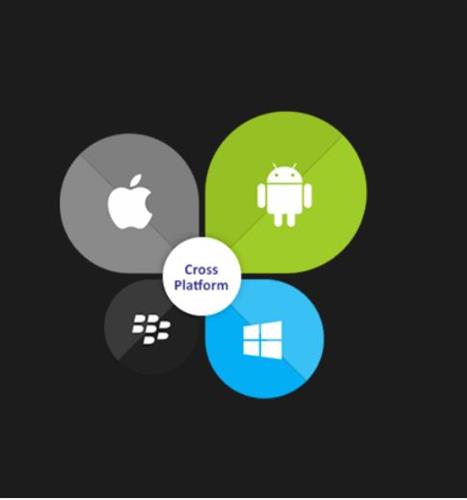
At whatever point there is an update for applications written in Swift/Objective-C or Java, the entire application should be recompiled and new adaptation must be conveyed to the App Store once more and it can take half a month for the process. To solve this problem, React Native applications work alternately, a local application can find explicit JavaScript code, which is later downloaded and accumulated when the application is propelled on a genuine gadget. By this, refreshing the application should be possible immediately without expecting to present another variant to the App Store over and over.
e.g.
import React from ‘react’;

import {Text, View} from ‘react’;
const WelcomeScreen = () =>
<view>
<Header title= “WELCOME TO REACT NATIVE”/>
<Text style ={heading}> Step One</Text>
<Text>
               Edit App.js to change this screen and turn it into your application
</Text>

<Text style ={heading}> See your change </Text>
<Text>
               Press Cmd + R inside the simulator to reload your app’s code
</Text>

<Text style ={heading}> Debug </Text>

<Text>
                Press Cmd + M or shake your device to open the React Native Debug Menu.
</Text>

<Text style ={heading}> Learn </Text>
<Text>
                Read docs to discover what to do next:
</Text>
</view>
History of React Native
In 2012 Mark Zuckerberg remarked, "The greatest error we made as an organization was wagering a lot on HTML rather than local". He guaranteed that Facebook would provide a better mobile experience. Inside Facebook, Jordan Walke found a way to generate UI elements for iOS from a background JavaScript thread. They decided to organize an internal Hackathon to perfect this prototype to be able to build native apps with this technology. After the development React Native, which empowers local Android, iOS, and UWP improvement with React, was reported at Facebook's React Conf in February 2015 and publicly released in March 2015. React Native become stabled on 8th April 2020 and its new version is 0.62.2
Advantages of React Native
- A React Native application permits a developer to fabricate Mobile application with the assistance of Web technology. If the developer who has involvement with web technology can stretch out similar abilities to create an application for the customer's business. A similar code can be adjusted and utilized on various and numerous stages permitting the business monstrous extension prospects.
- Applications made with React Native permits the developer to make and develop cross-platform applications that are local applications for their customers as this uses JavaScript parts that are based on iOS or Android segments. Its advantage is that application improvement time and maintenance is less expensive as the designer doesn't need to manufacture something very similar for another stage. This is because practically 90% of the code base is shared between the platform.
- React Native deals with JSX so for a developer there is no reason to learn a complex language in detail for Android application advancement or iOS application improvement like JAVA, Objective -C, Swift.
- Utilizing React Native application helps in giving organizations a preferred position as reusing code parts is efficient and saves time. Where some of the components are extracted with APIs.
- A customer with a little spending plan can have applications created on both the stages, iOS and Android with React Native as a front-end developer with working information on JavaScript can without much of a stretch make respond versatile application. Information on stage explicit plan design, local UI components, stage APIs, and local UI components is sufficient to begin making applications utilizing React Native.
- A current application can be effectively overhauled by including local UI segments into the current code. Creating and distributing refreshes for applications is quicker with React Native.
- A React Native application guarantees speed and deftness for the applications; alongside responsiveness and extraordinary client involvement in the local application experience.
Disadvantages of React Native
- JavaScript can be insufficient, slow to advance, and not secure. Furthermore, JavaScript information is basic to working with React Native. Organizations that require any Type A security like Banking applications or Finance the board applications should take an extra safety measure.
- Another point is that JavaScript offers no protections against software developer mistakes in this manner leaving space for runtime crashes that are in truth avoidable.
- In JavaScript that is brought up one significant downside is no help for decimals. JavaScript grows numerically off base decimal figures as decimal divisions can't effectively appear as double parts in equipment. This unquestionably could mess up applications that need any sort of calculation.
- Respond Native's USP lies in its efficiency and convey ability; yet the worries for all organizations are about its patent permit, security, and its drawn-out likely arrangements.
React Native Vs React
React Native and React have similar syntax and workflow but they also have some difference
- React is used to develop web applications using HTML tags whereas React Native is used for developing mobile applications without HTML tags.
- As a user of Animation in their application, react uses JavaScript and CSS but on the other hand, React Native comes with built-in libraries for it.
- In React, for navigating web pages it uses React Router whereas React Native same as animation it also has a built-in library for navigating mobile applications.
- In terms of security, react provides high security but React Native provides less compare to React.
- In React, VDOM used to render the codes but in React Native, it uses APIs to render the application.
- React application can be executed on all platforms whereas React Native is not platform-independent as it takes more effort to execute it.
Companies & mobile apps use React Native
|
|
|
|
|
|
|
|